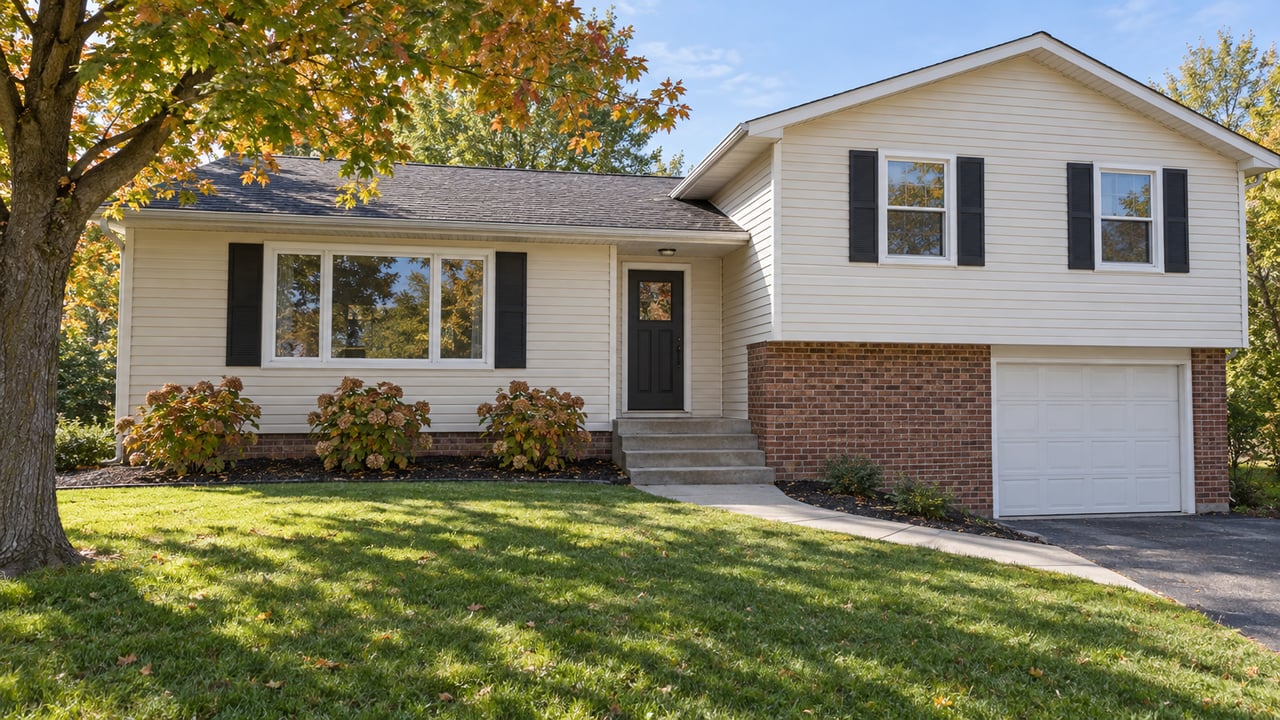
Vernon Is Revaluing Every Home This Fall. Your Tax Share Depends on Everyone Else's Price.
October 15, 2026
October 15, 2026
The property tax figure on a Vernon listing this October comes from values the town set in 2021. A new set of values, dated October 1, 2026, is being finished now. Owners will see it on notices in the next few weeks, and it takes effect on a tax bill due July 1, 2027. If you close on a Vernon home this fall, the reset lands in your first full year of ownership. The tax number you budget around today may not be the one you pay.
How big that difference turns out to be depends on how your home's value changed compared with every other property in town.
Connecticut towns revalue on a rotating five-year schedule. About a fifth of towns do it each year. Vernon's last revaluation was in 2021. The town hired Vision Government Solutions in October 2025 to do this one. Here is the calendar as published on Vision's Vernon revaluation page:
| When | What happens |
|---|---|
| June 2026 | Data verification mailers sent to every residential property |
| May to October 2026 | Field inspections of properties that have recently sold |
| October 1, 2026 | The date all values are measured from |
| November to early December 2026 | New value notices mailed, showing prior and new assessed value |
| January 2027 | Second notice for owners who went to an informal review |
| Spring 2027 | New budget adopted and mill rate set |
| July 1, 2027 | First tax bill based on the new values |
The same page gives two dates for the notices. One section says they will be mailed in November 2026. Another says owners will have them "by early December 2026." In practice, the new values should start showing up sometime in the next seven weeks or so.
For now, the town's tax rate for fiscal 2026-27 is 36.72 mills. The Town Council set it in April after the annual Town Meeting passed a $111,115,831 budget. Patch reported that the rate is a 1.75 percent tax increase, and that the motor vehicle rate is capped at 32.46 mills. The rate the town proposed in March was 36.8 mills, 0.71 mills above the 36.09 then in place, so the final rate came in a little lower. All of that math applies to 2021 values. The July 2027 bill will run on new values and a new rate.
The revaluation and your purchase are linked. From May through October 2026, Vision's staff were inspecting properties that had recently sold. Manchester, which is revaluing on the same date, describes the same approach. Appraisers there study sales that close before October 1 to see which factors pushed prices up or down. They also inspect recent sales and homes with permitted work that hasn't yet been added to the property records.
So sale prices from this past year are the evidence the new values are built on. If you bought in Vernon this summer, your price is one of the data points that helps set your own assessment and your neighbors'.
That matters for the next step, because the new values are only half of how a bill gets calculated.
Vision's page answers this directly. It says Vernon home prices have "increased significantly" since 2021, and that this "DOES NOT mean your taxes will increase simply because your assessment increased." When the total Grand List grows, the town can lower the mill rate. If the budget stayed the same before and after the revaluation, the rate would drop in proportion. The page calls revaluations "Revenue Neutral" and says their purpose is "to value all properties by the same standards at the same point in time."
In other words, the town has a budget to cover, and the revaluation decides how that cost is divided among properties. Your share gets bigger if your home's value rose faster than the town's total, and smaller if it rose more slowly.
To get a sense of scale, look at the last revaluation. On Vernon's 2021 Grand List, total net assessments rose 19.7 percent over 2020, and real estate assessments rose 19.5 percent.
Here is a made-up example using a round 20 percent increase and an unchanged budget. These numbers aren't predictions. They only show how the arithmetic works. If the whole Grand List rises 20 percent, today's 36.72 mills would fall to about 30.6 mills. Now take two homes that are each assessed at $200,000 today:
| Current assessment | Bill at 36.72 mills | New assessment | Bill at about 30.6 mills | Change | |
|---|---|---|---|---|---|
| Home A, value up 25% | $200,000 | $7,344 | $250,000 | $7,650 | Up about 4% |
| Home B, value up 10% | $200,000 | $7,344 | $220,000 | $6,732 | Down about 8% |
Both homes got a higher assessment, and the town collected the same total. One bill went up and the other went down. The only difference was how each home's value changed compared with the town as a whole. In real life the budget will change too, and as Vision's page puts it, until the full Grand List is done and a budget is adopted in spring 2027, "no one can say what the mill rate or your tax bill will be."
If every Vernon home had gained value at the same pace since 2021, revaluation would barely change anyone's share. Recent regional data shows prices moving at different speeds for different kinds of homes.
In July 2026, the Greater Hartford single-family median sale price rose 8.6 percent from a year earlier, to $475,000. The condo median fell 1 percent over the same period, to $303,500, according to Greater Hartford Association of Realtors data reported by the Hartford Business Journal. That same July, condo inventory rose 7.7 percent and average days on market for condos went from 11 to 18.
August figures from GHAR's monthly SmartMLS report show the same gap. Across the 27 towns GHAR represents, a list that includes Vernon, the single-family median in August 2026 was $491,000 on 480 closed sales. The townhouse and condo median was $290,000 on 123 sales. For January through August 2026, the medians were $450,000 for single-family homes and $300,000 for townhouses and condos.
These numbers come with two limits. They cover the whole region, not Vernon alone. And they show one year of movement, not the five years since 2021. What they do show is that values are moving at different speeds right as the October 1 valuation date passes. Run that through a revaluation designed to raise the same total revenue, and single-family homes that gained more could take on a larger share of the levy, while condos that held flat could carry a smaller one. Whether that happens in Vernon, and how much, won't be known until the new notices arrive. Vision's page puts it plainly: an owner's share can fall when their property's value rose less than other properties.
This also affects anyone comparing Vernon with nearby towns. According to the state's revaluation schedule, towns in the area are on different cycles:
That means a Tolland listing's tax figure is based on 2024 values, while a Vernon listing's figure is based on 2021 values that are about to be replaced. Manchester's assessor says new-value notices will go out during fall 2026. East Hartford says its notices will go out in December 2026, with the new mill rate set in March 2027 and bills in July 2027. If you're deciding between Vernon and Manchester, both towns are going through the same reset on the same timeline. If you're comparing either one with Tolland or Coventry, the tax figures are measuring different years.
Can I see a Vernon home's new value before I close? It depends on timing. The notices will show both the prior and new assessed value. When they're mailed, Vision will provide a web address for the assessor's online database, where owners can check their property data and compare it with similar homes. Closings scheduled for December or later may be able to look at that data.
What happens if the new value looks wrong? The notice explains how to book an informal review with Vision's appraisal team. Owners who go to one receive a second notice in January 2027 saying whether their value changed. That notice and the assessor's website explain how to appeal further.
Is the revaluation meant to bring the town more money? According to Vision's page, no. It says revaluation "is NOT intended to raise revenues." The tax rate is adjusted during the spring 2027 budget process. A tax increase in July 2027 would come from the budget the town adopts, not from the revaluation.
This post explains how Connecticut revaluation and mill rates generally work. It isn't tax, legal, or financial advice, so check your own situation with the assessor's office or a qualified professional.
If you're weighing a Vernon purchase this fall, or you're an owner trying to make sense of a new value notice, Shelby Muraski can go through the timing, the property records, and how the reset affects a home you're considering. Let's Connect.
Stay up to date on the latest real estate trends.


With over 38 years of experience, Shelby can help make your real estate dreams come true! Call today to find out how to get top dollar when listing or the best price when buying.